
Homeowner guidance
Repair or replace your AC? Compare the finding before the price
A useful decision starts with what failed, what each proposal fixes and what remains uncertain.
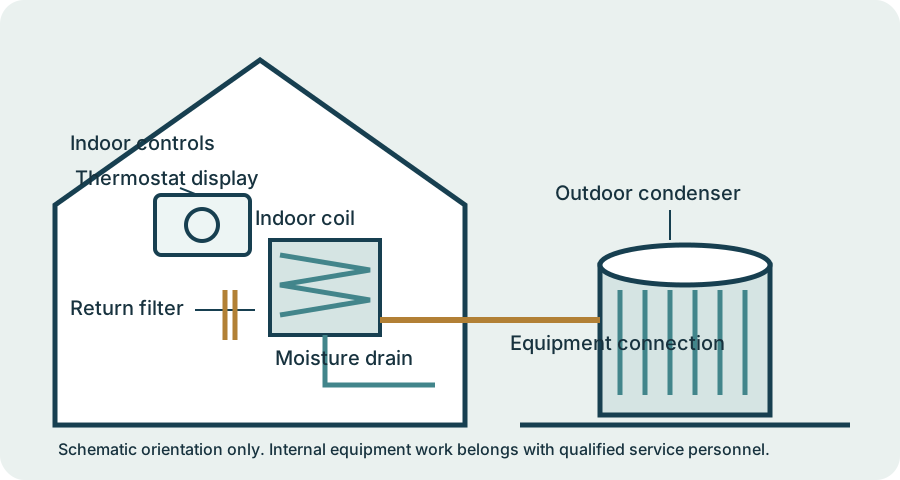
Describe what you can observe
- Thermostat
- Record the displayed setting and whether the system appears to run.
- Return filter
- Ask which filter and maintenance instructions apply to this equipment.
- Indoor cooling coil
- Tell the technician about cooling changes; leave internal inspection to qualified personnel.
- Moisture drain
- Describe visible moisture from a safe position without opening equipment or attempting a drain repair.
- Outdoor condenser
- Explain ordinary access restrictions and any sounds you noticed from a safe distance.
Repair path
Start with an identified fault. Ask what the repair corrects, its limits and whether another unresolved condition remains.
Replacement path
Compare a matched equipment scope, installation requirements, permits, removal and warranty. Ask how the replacement addresses the documented findings before approving it.
Get the repair finding in writing
A repair recommendation should explain the observed fault and proposed work. Ask which parts and labor are included, whether another visit is expected and what happens if the initial work reveals another problem. A large number by itself does not explain whether replacement is the better fit. Keep the finding beside earlier service records so you can distinguish a recurring fault from a new one.
Ask what replacement would actually change
A replacement proposal should identify the indoor and outdoor equipment, controls, reused components and related work. If the original concern is an upstairs room that stays warm, ask how the proposal addresses that concern. Replacing equipment does not automatically resolve distribution or building conditions. Ask the business to explain the assessment behind its recommendation rather than making the decision from a model name alone.
Put warranty and remaining risk beside the cost
Check the coverage that applies to the existing equipment and the terms offered with new work. Equipment and labor warranties can have different conditions. Ask who handles a claim and what work is excluded. No website can promise how long an individual system will last, and a universal age cutoff cannot replace an assessment of your equipment.
Choose a documented next step
Compare the same problem across both options. Identify unanswered questions before approving work: the cause of the fault, expected scope, permit responsibility, access requirements and the effect of an unexpected finding. If a proposal cannot explain what it fixes, ask for clarification. Use the service-call planner to prepare a concise symptom summary and the questions you still need answered.
A practical comparison aid
| Question | Repair proposal | Replacement proposal |
|---|---|---|
| What problem is addressed? | Written fault and proposed correction | Assessment and reason for replacement |
| What is included? | Parts, labor and follow-up | Matched equipment, controls, related work and removal |
| What remains? | Other findings or unresolved comfort concerns | Reused components and excluded work |
| What protection applies? | Existing coverage and repair warranty | Equipment and labor terms |